
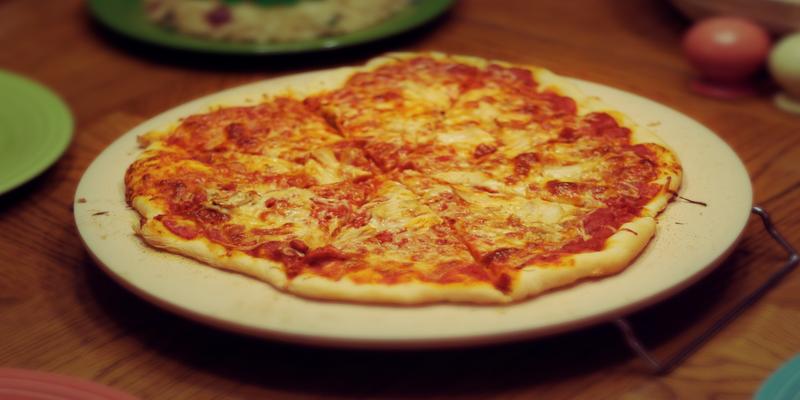
Master Home Pizza Baking with Top Quality Pizza Stones
There is no flavor similar to the taste of that perfect golden crisp pizza crust that has just come out of your oven at home. A pizza stone is among the cookware necessary for attaining restaurant results at home and makes the operation of professional bakers easier.
It is observable that this thermal slab has appealed majorly to various Canadians since Home Depot and Canadian Tire caution a steady increase in baking ware sales.
Basic Heat Transfer Principles
The knowledge about how pizza stones function is elementary heat transfer technology. The material absorbs the heat in this technology, and it carries it to the rest of the area to eliminate areas that develop temperature which causes uneven cooking.
In this way, it simulates traditional brick ovens used in pizzerias over centuries. This is a feature that has found favor among Canadian homeowners especially during the long winter seasons when outdoor cooking typically becomes almost impossible.
Cordierite emerges as the best material to make pizza stones because it bears extremely good thermal characteristics. This mineral structure can take temperatures up to 1400°F (760°C) and not crack, hence suitable for high-temperature baking conditions such as those that may be encountered in Canadian kitchens.
Its porous structure also helps absorb the moisture from the dough to create crispy toppings.
Material Comparison
Unglazed terra cotta is less expensive but must be more delicately handled. Good quality terra cotta stones can be found by Canadian shoppers at retailers like Lee Valley Tools for about $30-$50 CAD.
Cast iron types offer better durability but must be seasoned just like regular cast iron cookware. In choosing materials, the best choice has to depend on how often you cook and the type of oven that you have.
Cordierite is chosen since it absorbs heat instantaneously hence suitable for someone who has a gas oven while cast iron can retain heat making it good for electric oven users. Thermal mass becomes particularly important during Canadian winters when maintaining consistent oven temperatures is challenging.
Proper Usage Techniques
Out of all steps, preheating is by far the most important in pizza stone success. To get the best outcome, allow at least 30 minutes for the stone and the oven to be preheated from a cold setting.
Such a gradual increase in temperature would avoid thermal shock, which would otherwise break or damage the stone. Canadian bakers advise that one should set the oven up to an authentic temperature of 260°C (500°F).
Practice makes perfect when it comes to sliding a cornmeal or semolina dusted dough onto the hot stone using a pizza peel that definitely does knack something up. Others rely on parchment paper as a safety net and to avoid sticking problems for beginners that do not compromise on the texture of the crust.
Great for baking artisan breads and flatbreads, pizza stones give a quality of even heat bakery artists in Canada appreciate when working with whole grain flours that need steady temperatures to rise and achieve proper texture.
Maintenance and Care
Cleaning is simple, never place a hot stone into cold water or cleaning solutions will result in instant cracking because of thermal shock. The stone should cool off completely inside the oven before you try to take it out—several hours are needed considering cooler climates in Canada.
Use only stiff brushes or plastic scrapers for cleaning to remove food particles. For stubborn residues, make a paste of baking soda and water─this solution is very effective on cheese spills which are common with Canadian-style pizza toppings.
Do not use soap at all as it will flavor the porous material with unwanted chemicals. Store the stone in a dry place, as humidity fluctuates in Canadian homes, preferably wrapped with something breathable rather than plastic.
Tips for Canadian Conditions
Some bakers keep their stones permanently in the oven since it helps maintain consistent moisture levels within the house. Thicker stones (at least 1.5cm) generally present better heat retention and durability.
Canadian consumers report best results with brands like Emile Henry and Lodge since high-temperature cookware is their specialization. Common failure points are rapid temperature changes and direct flame exposure, so for gas grill users, stones should be positioned carefully not to have direct contact with flames.
Most Canadian outdoor cooking enthusiasts recommend using heat deflectors when grilling pizzas in sub-zero temperatures. Warranty coverage varies significantly by manufacturer, so Canadian shoppers should look for a solid one-year warranty against any manufacturer’s defects.
Some of the better brand labels give a lifetime guarantee, which seems to reflect confidence in their product’s durability.
Impact on Home Cooking
Pizza stones have changed home baking in Canada; professional results are attainable for the home baker. Families usually spend $5-8 CAD for homemade pizza compared to $20+ for restaurant orders, resulting in significant savings.
It allows for generally better nutrition by controlling ingredient quality. Canadian cooking instructors have noted more interest in artisanal baking since pizza stones hit mainstream status.
Classes around different provinces in community centres that revolve around stone-baking techniques further typify this trend and increasing culinary culture among Canadian home-cooks. Another benefit is energy efficiency.
The fact that the stones can retain heat translates to reduced oven temperatures in the long run, which translates into some slight relief in electricity costs – an important consideration in Canadian households facing rising energy prices.
Expert Insights
Professional chefs throughout Canada uniformly recommend purchasing a quality pizza stone. For the home chef, based in Toronto, Michael Bonacini, a good stone pays for itself within months if you’re making pizzas on a regular basis.
Look for Canadian-produced ones whenever possible—it’s made for our climate. Baking experts advise avoiding cheap shortcuts—”That $20 ‘bargain’ from any discount store will crack after three uses,” cautions Vancouver culinary instructor Sarah Pennington.
Spend $80-100 CAD on a proper cordierite stone and it doesn’t let you down for years. Proper stone use actually protects oven elements by allowing even heat distribution thereby not letting the hot spots burn out the life of an oven.
This is what makes them particularly valuable for Canadian homeowners facing expensive appliance replacements. Composite materials that come to the market are going to be part of Canada’s ever-evolving pizza-stone future.
Ceramic and metal materials will allow even better heat distribution. Built-in thermometers are being tested by manufacturers so home cooks can monitor precise surface temperatures.
With Canadian taste buds acquiring a liking for artisanal food, pizza stones would probably stay as a basic necessity in the kitchen. Their simplicity, effectiveness, and versatility ensure they remain useful in household cooking.


